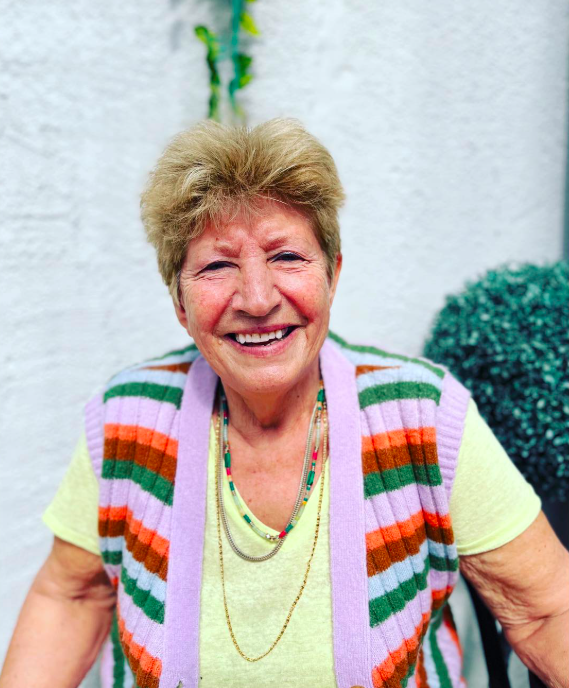
I think I was around 8 years old walking through Trent Park, and from a distance I could hear a familiar tune played on the darbuka. We couldn’t see anyone around, but mum paused and said ‘Hasibe is here.’ It surprised me how my mum was able to know of this person’s presence without seeing or hearing her voice. She was right, it was Hasibe Teyze. Years later, in my teens, I had the pleasure of travelling to Turkiye with her. She prayed during take-off, she told me stories, jokes and riddles once we were in the air (for any of you who know Hasibe Teyze will know the jokes and riddles I mean) once we landed, she was the first to applaud the pilot then finish off with a humming of a song, a slight shimmy and another little gratitude prayer.
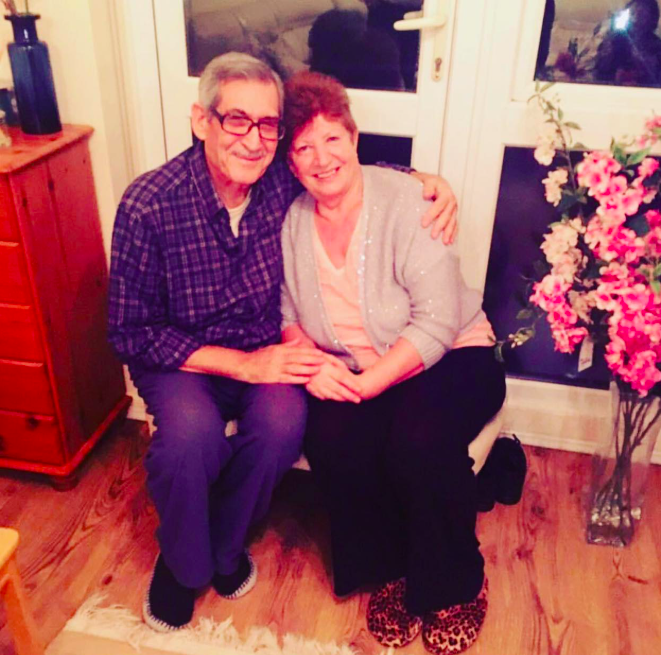
‘I remember getting off the plane for the first time in London Heathrow, unsure of my surroundings and not knowing which direction to follow, I held on to my children’s hands and clenched the Quran under my arm for guidance. Ekrem arrived months before us, he’d arranged a place to stay and somewhere to work. There were butterflies in my belly walking out to arrivals, I knew he’d be waiting on the other side, but I didn’t know what was beyond those gates. When the double doors opened, the grey skies of London lit up with the sight of your Ekrem Amca. I went to kiss his hand, a custom we only follow-on Eid. That’s how excited I was to see him, the day felt more glorious than any Eid I’d lived. I’d kiss his palms if he were here with us now. ’
Allah bi yastikda kocatsin’ A Turkish saying often used for newlyweds, which translates to ‘May you age together on the same pillow’. One can only assume this saying came about when two pillows were used to make one large pillow, also known as ‘kari koca yastigi’ ‘the spouce pillow.’
‘We didn’t have a spouse pillow; we had a single pillow for the both of us and we slept on it for the first 6 months of my arrival to this county. We were trying to save money and we were all home sick, I have friends whose tears have lined those jackets in the factories we’ve worked at, but life in Turkiye at the time was not that easy either. So, it was important to hold on to any moment filled with joy.’ Hasibe Teyze is too humble to realise that she is the one who created those moments of joy around others.
Although the rag trade was commonly known to be run by the Greek or Jewish community Hasibe Teyze’s first place of work was at an English factory.
‘I was the only non-English worker, I was never mistreated, everyone was always very helpful and polite, but I knew I was never welcomed. Not because of language but differences were not embraced back then or because like me they too thought I’d go back after a year or two. Once those few years had passed, we did go back, but only for a family holiday. As much as we missed and loved our country, we had become a ‘gurbetci’ an expat and didn’t feel that we could fit in there either.
She stops, at this point I think she wants to have a break as she gets emotional but instead, she starts singing ‘Her gecenin sabahi’ by Ferdi Tayfur the other women sitting with us join in, before I know it somehow, we are all singing ‘ Bursanin ufak tefek taslari, she then tells me to have this as her intro song for the stories.
This pretty much sums up Hasibe Teyze – oozing with energy, attentively daring and always full of gratitude.
 More Than A Bundle Story
Love to hear your view